May 2026 Thailand Visa Guide
Welcome to the Land of Smiles! If you are planning your first-ever trip to Thailand, you are about to embark on an incredible journey. From the neon-lit food stalls of Bangkok to the misty mountains of Chiang Mai and the turquoise waters of the southern islands, Thailand is a dream destination.
However, we know that the planning part of travel, specifically visas, can feel a bit overwhelming. Rules can change, and you want to make sure your arrival is as smooth as possible. This guide is designed to give you total confidence for your trip.
Can I Just Show Up?
- Standard Entry: 60-day visa exemption for 93 countries including the UK, USA, and Australia.
- Digital Nomads: The Destination Thailand Visa (DTV) offers 5-year multi-entry stays for remote workers.
- Mandatory Digital Card: All arrivals must complete the Thailand Digital Arrival Card (TDAC) prior to landing.
- Extensions: Most entries allow a one-time 30-day extension at local immigration offices for 1,900 THB.
- Overstay Penalties: Daily fines of 500 THB apply, with long-term overstays resulting in multi-year bans.
Important Note: As of March 20, 2026, the Thai Foreign Ministry has formally recommended returning the exemption period to 30 days. While the 60-day rule is still the active standard today, this policy shift is expected to be implemented very soon. Additionally, immigration officers at major hubs are now closely scrutinizing anyone on their third visa-exempt entry within a rolling 12-month period.
Thailand Digital Arrival Card (TDAC)

The biggest change for travelers in 2026 is the mandatory Thailand Digital Arrival Card (TDAC). This has replaced the old paper forms you used to fill out on the plane.
Every foreign visitor entering by air, land, or sea must register online before arrival. It is a simple process, but it is essential for a no-stress entry at immigration.
- When to do it: Complete the registration within 72 hours (3 days) before you arrive.
- Cost: It is completely free. Be wary of scam websites asking for a fee; only use the official government portal.
- What you get: After submitting, you will receive a QR code via email. Save this on your phone or print a copy to show the officer at the border.
Visa Comparison Table 2026
| Visa Type | Duration per Entry | Cost (Initial) | Best For |
|---|---|---|---|
| Visa Exemption | 60 Days | Free | Short-term tourists |
| DTV | 180 Days | 10,000 THB | Remote workers & freelancers |
| Retirement (Non-O) | 90 Days / 1 Year | 2,000 THB | Travelers aged 50+ |
Which Visa is Right for You?
1. The 60-Day Visa Exemption (Most Common)
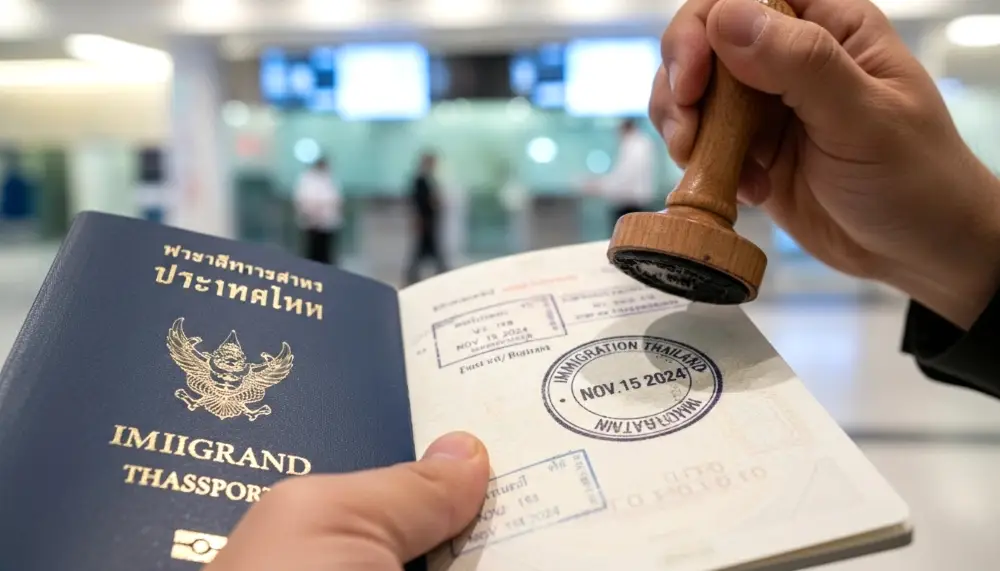
Perfect for a classic holiday. You get a stamp in your passport at the airport that allows you 60 days of exploration. Please note, this may change to 30 days, with a possible 30 day extension.
- Best for: Short holidays, island hopping, and two-month backpacking trips.
- Requirement: A passport with at least 6 months validity and a confirmed return or onward flight.
2. The Destination Thailand Visa (DTV)
If you are a digital nomad or a workcation enthusiast, the DTV is the gold standard. This is a 5-year multiple-entry visa that allows you to stay for 180 days at a time.
- Best for: Remote workers, freelancers, or people taking long-term Muay Thai or cooking courses.
- Extension: You can extend your stay once per entry for another 180 days (for 1,900 THB) without leaving the country.
- Requirement: You must show proof of 500,000 THB (approx. $14,200 USD) in a bank account. Most embassies now require these funds to be seasoned (held in the account) for at least 3 to 6 months. You also need proof of remote employment or course enrollment and minimum $50,000 USD health insurance coverage.
3. Tourist Visa (SETV)
If your country isn’t on the exemption list, or if you want a guaranteed 60 days with less on-arrival questioning, you can apply for a Single Entry Tourist Visa at a Thai embassy before you leave home.
Practical Tips for a Smooth Arrival
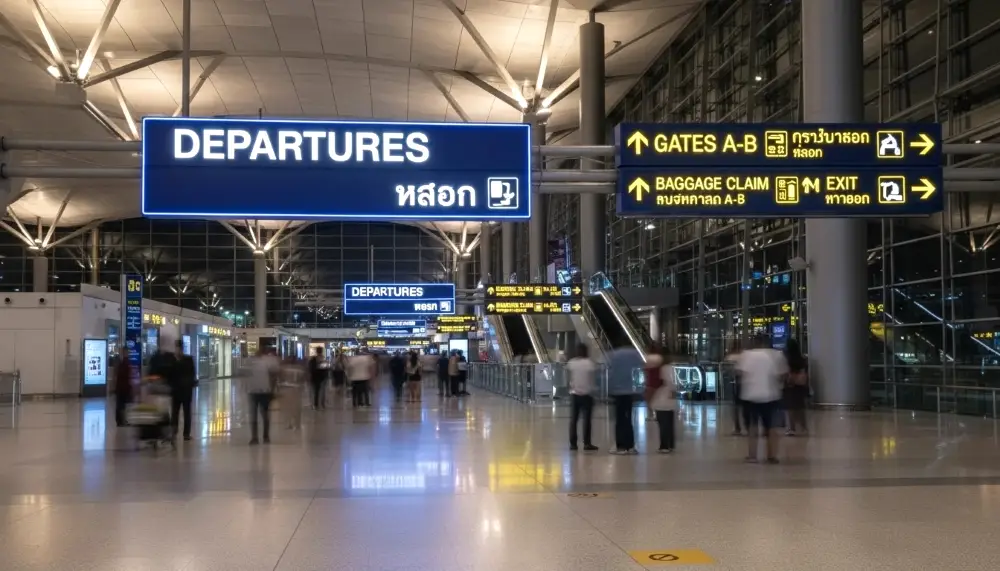
Thai immigration officers are generally very friendly, but they do have a job to do. To make sure you breeze through the airport in Bangkok or Phuket, keep these tips in mind:
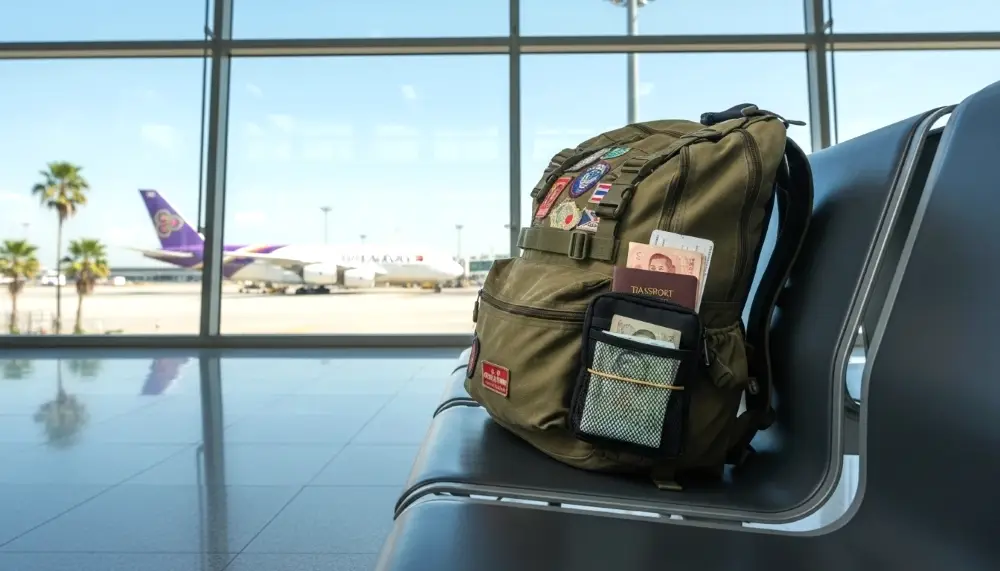
- Proof of Funds: Technically, immigration can ask to see that you have at least 20,000 THB per person (about £450 or $570) in cash or equivalent. While they rarely check casual tourists, it is good practice to have some cash on hand.
- Onward Travel: Your airline might not let you board the plane without proof that you are leaving Thailand within your permitted stay. If you have a one-way ticket, consider booking a throwaway bus or flight ticket to a neighboring country like Laos or Malaysia.
- Print Your Documents: Even in our digital age, having a physical printout of your TDAC QR code and your first hotel booking can save the day if your phone battery dies or the airport Wi-Fi is spotty.
Pro Tips For Stress Free Travel:
Grab & Bolt: Essential for getting to and from the piers without overpaying. Bolt is often 20% cheaper in Phuket, while Grab is more reliable in Koh Samui.
Yesim or Saily: Secure an eSIM before landing. Having 5G signal while crossing from Krabi to Koh Lanta allows for real-time tracking of the ferry’s progress.
Klook & Get Your Guide: Use these for the “day trip” ferries where snorkeling gear and lunch are included.
Nord VPN: Vital for booking through 12Go or Agoda on public pier Wi-Fi to protect financial data.
Currency (THB): Always keep 500 THB in small notes (20s and 100s). Many smaller piers in islands like Koh Kood do not accept cards for the mandatory cleaning fees.

Cultural Insights:

Understanding a little bit of Thai etiquette goes a long way toward a warmer welcome. When you hand your passport to the officer, a small nod and a smile are appreciated.
In Thailand, the head is considered the most sacred part of the body, while the feet are the lowest. Never point your feet at people or sacred objects. You will also notice the Wai, the traditional greeting where palms are pressed together. As a visitor, a polite smile and a Sawasdee-ka (for women) or Sawasdee-krab (for men) will make you many friends!
A Note for First-Timers:
If you feel a bit anxious about navigating a foreign country’s visa system, don’t worry, you are not alone! Thailand is one of the most touristed countries in the world for a reason: they make it easy for you to visit.
The systems in 2026 are more digital than ever, which actually makes things more predictable.
As long as your passport is valid and you have your TDAC QR code ready, you are 95% of the way there. The officers at major hubs like Suvarnabhumi Airport see thousands of first-timers every day and are used to helping travelers find their way.
Do I still get 60 days visa-free in Thailand?
Yes. As of March 21, 2026, the 60-day visa exemption remains the active law for 93 countries. While the Thai Foreign Ministry proposed a reduction to 30 days on March 20, 2026, this change has not yet been signed into law. Travelers entering today will still receive a 60-day stamp, which can be extended once for an additional 30 days at an immigration office.
Is the Thailand Digital Arrival Card (TDAC) mandatory?
Yes, the TDAC is now mandatory for all foreign nationals entering Thailand by air, land, or sea in 2026. You must complete the registration for free via the official Thai Immigration portal within 72 hours before your arrival. You will receive a QR code that must be presented to immigration officers upon entry.
What are the 2026 requirements for the Destination Thailand Visa (DTV)?
To qualify for the 5-year DTV in 2026, you must provide proof of 500,000 THB (~$14,200 USD) held in a personal bank account for at least 90 consecutive days. You also need a remote work contract with a non-Thai employer or a professional portfolio if you are a freelancer. The visa allows stays of 180 days per entry and is valid for multiple entries over five years.
What is the fine for overstaying a Thai visa?
The penalty is 500 THB per day, capped at 20,000 THB. If the overstay is discovered by an officer during a random check rather than at the airport departure, it can lead to immediate detention and deportation.
Does the 60-day exemption apply to land borders?
Yes, but travelers are generally limited to two visa-exempt entries via land borders per calendar year. Air entries are monitored but have more flexibility for genuine tourists.
Is health insurance mandatory for 2026 entry?
While the 60-day exemption does not strictly require proof of insurance, the DTV and Retirement visas often require a minimum coverage of $50,000. It is highly recommended to carry travel insurance regardless of the visa type.
Continue Planning Your Trip