Living In Chiang Mai
For many travelers visiting Thailand for the first time, the idea of living somewhere in the country, even temporarily, can feel both exciting and mysterious. Northern Thailand’s mountain city of Chiang Mai is often the place where visitors first start imagining a slower, more immersive travel experience.
Whether you’re planning a longer stay, a digital nomad adventure, or simply want to understand what life is like beyond the typical tourist route, Chiang Mai offers a glimpse into a different side of Thailand.
The Quick Summary:
In short, Thailand is generally very affordable for travelers.
Budget: 35,000 to 70,000 THB per month for a high-quality lifestyle.
Visa Options: Destination Thailand Visa (DTV) for long-term remote workers or 60-day visa-exempt entry.
Best Neighborhoods: Nimmanhaemin for modern amenities, Santitham for local prices, and the Old City for cultural immersion.
Best Time to Live: November to February for cool weather. February to April is the agricultural burning season.
What is the Cost of Living in Chiang Mai?

Living in Chiang Mai costs between 30,000 THB and 85,000 THB monthly depending on lifestyle choices. A modern studio in Nimmanhaemin averages 12,000 to 18,000 THB. Local meals cost 50 to 80 THB, while high-end international dining reaches 500+ THB. Internet and utilities typically add 3,000 THB to the budget.
Financial freedom is the primary currency of Northern Thailand. The Thai Baht (THB) stretches significantly further here than in coastal hubs like Phuket or Bangkok. Rent is the largest variable. A standard one-bedroom condo in a building with a pool and gym in the Chang Phueak district offers incredible value. Daily expenses are manageable: a fresh coconut at the Siri-wattana Market costs 40 THB, and a monthly gym membership at Muscle Factory or Maya Lifestyle Shopping Center averages 1,500 THB.
Monthly Budget Costs:
| Expense Category | Budget Nomad (THB) | Mid-Range Professional (THB) | Luxury Expat (THB) |
|---|---|---|---|
| Accommodation | 8,000 – 12,000 | 15,000 – 25,000 | 40,000 – 60,000+ |
| Daily Food & Drink | 9,000 – 12,000 | 15,000 – 20,000 | 30,000 – 45,000 |
| Transport & Leisure | 4,000 – 6,000 | 8,000 – 15,000 | 20,000 – 30,000 |
Where Should Remote Workers Live in Chiang Mai?
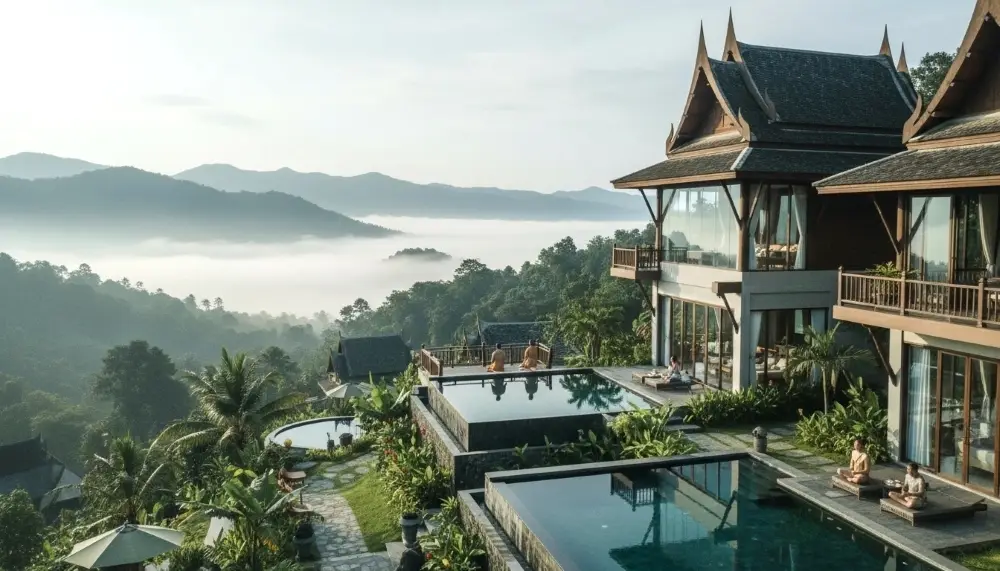
Remote workers primarily reside in Nimmanhaemin for its dense concentration of cafes and co-working spaces like Yellow Coworking. Santitham offers a localized, affordable alternative just north of the moat. For those seeking tranquility and mountain views, the Hang Dong or Mae Hia districts provide spacious villas and proximity to international schools.
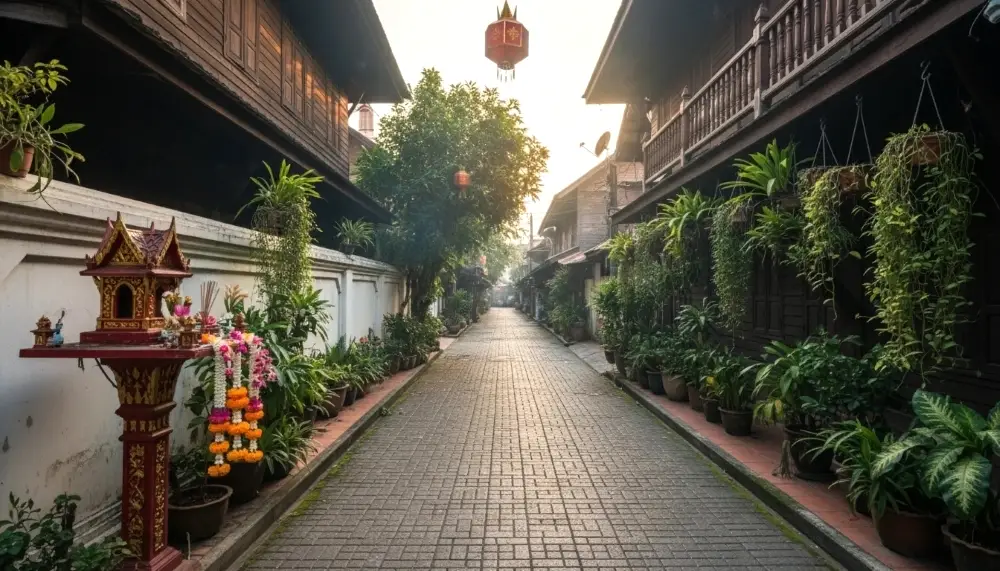
Location choice dictates the daily rhythm. Nimmanhaemin, or “Nimman,” is the heartbeat of the modern city. This area is packed with boutique shops and One Nimman, a high-end lifestyle complex. Conversely, the Old City is a square mile of history bounded by a medieval moat and the Tha Phae Gate. While picturesque, it is often louder and more tourist-centric.
Contrarian Insight: Many newcomers flock to the Old City for the charm, but the real value is found in Santitham. It is a gritty, authentic neighborhood located between Nimman and the Old City. It provides the best street food in the city at local prices, minus the “tourist tax” found on the main strips.

Thai Culture and Etiquette:
Respect in Thailand is centered on the “Wai” greeting and honoring the Monarchy and Buddhism. Always remove shoes before entering homes or temples (Wats). Dress modestly at religious sites like Wat Phra That Doi Suthep. Keep the head (sacred) higher than others when possible and never point feet (lowly) at people or Buddha statues.
Living in Chiang Mai requires an understanding of “Jai Yen” or a “cool heart.” Thais value calmness and non-confrontational behavior. Losing one’s temper results in a “loss of face,” which can permanently damage professional and personal relationships.
Be aware of the “Plus Plus” (++) system in restaurants. Many mid-to-high-end establishments add a 10% service charge and a 7% Value Added Tax (VAT) to the bill. In these cases, tipping is not required. At local stalls or smaller shops, tipping is not a traditional Thai custom, though rounding up to the nearest 20 THB for exceptional service is a kind gesture.
Food Is a Way of Life:
If you love food, Chiang Mai will quickly win you over.
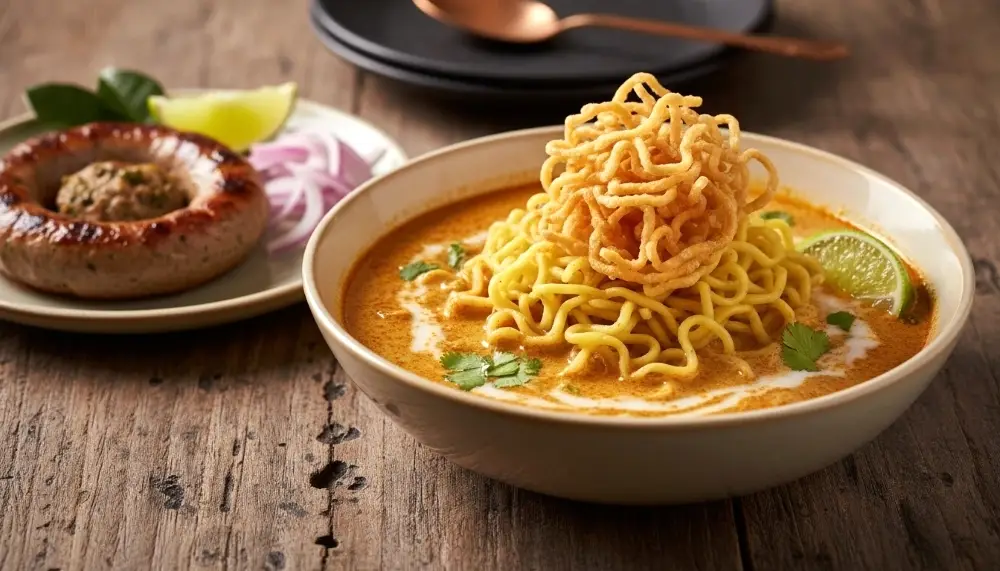
Northern Thai cuisine has its own unique flavors that differ from the dishes found in Bangkok or southern Thailand. Rich curries, fresh herbs, and slow-cooked meats create unforgettable meals.
Some dishes first-time visitors should try include:
- Khao Soi (Chiang Mai’s famous coconut curry noodle soup)
- Sai Ua (northern Thai sausage packed with herbs)
- Sticky rice with grilled meats
- Mango sticky rice for dessert
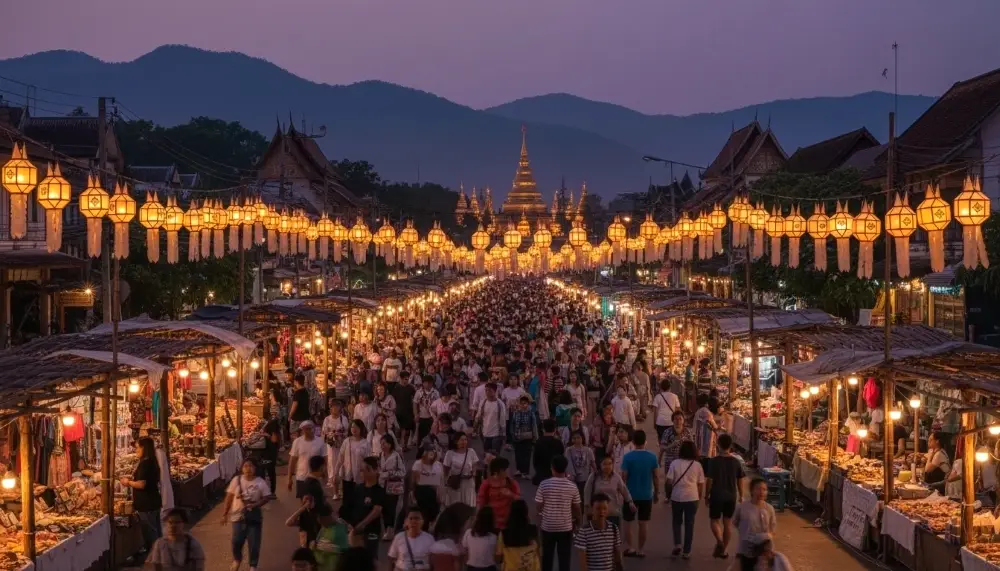
Night markets are one of the best places to explore these dishes. The atmosphere is lively, the food is incredibly fresh, and prices are usually very affordable.
Pro Tips For Stress Free Travel:

The essential Chiang Mai toolkit includes Grab and Bolt for transport, FoodPanda or GrabFood for deliveries, and Agoda for local stays. Use Yesim or Airalo for immediate e-SIM data, though a local AIS or TrueMove H physical SIM offers better rates. A reputable VPN like NordVPN is vital for secure remote work.
Navigation and logistics are entirely digital in 2026.
Health: The AirVisual app is mandatory. During the burning season (February to April), PM2.5 levels can become hazardous. High-quality N95 masks and indoor air purifiers are essential during this window.
Transport: Bolt is usually cheaper than Grab for cars and motorbikes. The iconic Red Trucks (Songthaews) remain the local choice for a flat 30 THB fee within the city walls.
Payments: Most permanent residents use PromptPay QR codes. For those without a Thai bank account, carry cash in various denominations.
A Hub for Long-Term Travelers:
Over the past decade, Chiang Mai has become one of the world’s most famous digital nomad destinations.
Cafés with fast Wi-Fi, co-working spaces, and a strong international community make it easy for travelers to work remotely while enjoying life in Thailand.
Even if you’re only visiting for a short time, you’ll likely meet people from all over the world who originally planned to stay for a week and never left.
The atmosphere is social, open, and welcoming.

For The Nervous:

Safety in Chiang Mai is exceptionally high. Violent crime against foreigners is rare. The most significant risks are road-related. Motorbike accidents are common: never ride without a valid International Driving Permit (IDP) and a helmet.
If an emergency arises, the Tourist Police are reachable at 1155 and generally speak excellent English. Confidence comes from preparation. Trust the local systems, stay hydrated with 7-Eleven electrolytes, and the city will reveal its magic.
How Chiang Mai Compares:
Every part of Thailand has its own personality.
Bangkok is energetic, chaotic, and endlessly exciting. The southern islands offer beaches, turquoise water, and tropical nightlife.
Chiang Mai, by contrast, is calmer and more reflective.
It’s the place where travelers slow down, explore culture more deeply, and enjoy the natural beauty of northern Thailand.
For many visitors, the ideal trip includes experiencing all three sides of the country.
Final Thoughts:
There’s a reason so many travelers return to Chiang Mai again and again.
The city has a rare combination of warmth, culture, adventure, and comfort that makes it incredibly easy to fall in love with. What begins as a simple stop on a Thailand itinerary often turns into something much more meaningful.
If you’re planning your first journey to Thailand, consider spending a little extra time in Chiang Mai.
You might arrive as a visitor, but there’s a good chance you’ll leave feeling like you’ve discovered a second home.
FAQ: Frequently Asked Questions
What is the best month to move to Chiang Mai?
November is the ideal month. The monsoon rains have subsided, the landscape is lush green, and the temperatures are mild. This also aligns with the Loi Krathong and Yi Peng lantern festivals.
Do I need a car in Chiang Mai?
No. Between Grab, Bolt, and the ubiquitous Songthaews, a car is often a liability due to limited parking in Nimman and the Old City. Renting a Honda Click scooter is the local standard for 150-250 THB per day.
Is the tap water safe to drink?
No. Even locals avoid tap water. Use the filtered water machines (1 THB per liter) found on most street corners or order bulk delivery of 18-liter glass bottles from companies like Polestar.
Where is the best co-working space?
Yellow Coworking in Nimman is the premier choice for networking. For a quieter, more focused environment, Punspace remains a staple for serious developers and writers.
Continue Planning Your Trip